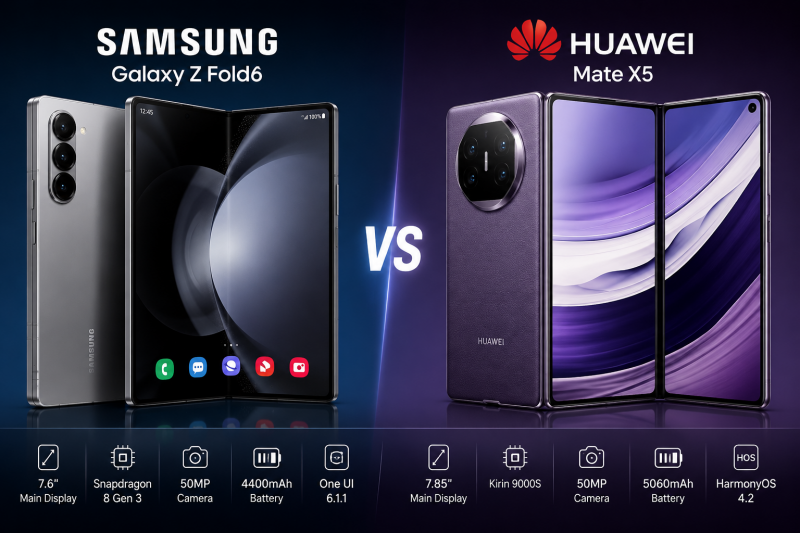
Foldable smartphones were once considered little more than futuristic concepts. Today, they have become one of the most exciting segments in consumer technology, with manufacturers pushing the boundaries of design, engineering and innovation.
At the centre of this race stand two companies: Samsung and Huawei.
Both brands have invested billions into foldable technology, yet they have taken very different approaches. Samsung has focused on refining its products over multiple generations, while Huawei has aggressively pursued thinner designs, larger displays and cutting-edge hardware.
As foldables become increasingly mainstream, the question is no longer whether these devices represent the future of smartphones. Instead, consumers are asking a different question: which company is doing it better?
How Samsung Built the Foldable Market
When Samsung launched the original Galaxy Fold in 2019, the product faced criticism for durability issues and design flaws.
However, Samsung persisted.
Over the following years, the company steadily improved its foldable lineup, introducing stronger hinges, more durable displays, water resistance and software optimised specifically for larger screens.
Today, Samsung's Galaxy Z Fold and Galaxy Z Flip series are among the most recognised foldable smartphones in the world.
The company's greatest strength lies in its experience. After several generations of development, Samsung has built an ecosystem that feels mature, reliable and polished.
For many consumers, Samsung remains the safest choice in the foldable market.

The Battle for the Thinnest Foldable
One of the biggest trends in foldable smartphones today is the race to create thinner and lighter devices.
Early foldables were often criticised for feeling bulky compared to traditional smartphones.
Both Samsung and Huawei have made significant progress in addressing this issue.
Recent Huawei models have gained praise for achieving remarkably slim profiles without sacrificing screen size.
Samsung has also responded by refining the Galaxy Z Fold lineup, with reports suggesting future generations will continue reducing thickness while improving durability.
As a result, foldables are becoming increasingly practical for everyday use.

Software: Samsung's Biggest Advantage
Hardware is only part of the story.
A foldable device is only as good as the software that powers it.
This is where Samsung maintains a significant advantage.
Through years of collaboration with Android developers and Google, Samsung has created one of the most refined foldable software experiences available.
Features such as:
- Advanced multitasking
- App continuity
- Split-screen productivity
- Optimised tablet-style interfaces
help users take full advantage of larger displays.
Huawei's software experience has improved considerably, but Samsung's maturity in this area remains difficult to match.

Cameras and Performance
Both companies offer flagship-level performance.
Samsung typically relies on the latest premium processors and integrates its devices closely with the broader Android ecosystem.
Huawei, meanwhile, has continued to impress with camera technology, an area where the company has long excelled.
In low-light photography, zoom capabilities and image processing, Huawei devices frequently rank among the industry's best.
For consumers who prioritise mobile photography, Huawei remains a serious contender.

Why Foldables Matter More Than Ever
The importance of foldable smartphones extends beyond simply having larger screens.
Manufacturers increasingly view foldables as the future premium segment of the smartphone market.
These devices combine:
- Smartphone portability
- Tablet-like productivity
- Enhanced multitasking
- Improved media consumption
- Advanced AI-powered features
As artificial intelligence becomes more integrated into mobile devices, larger foldable displays provide new opportunities for productivity and content creation.
For this reason, many analysts believe foldables will play a central role in the next generation of smartphones.
The Challenges Ahead
Despite impressive progress, foldables still face challenges.
Prices remain high compared with traditional smartphones.
Durability concerns continue to influence some buyers.
Battery life and repair costs also remain areas where manufacturers must improve.
The company that solves these issues first could gain a significant advantage in the years ahead.
Final Verdict
Samsung currently offers the most complete foldable experience for the majority of consumers. Its devices benefit from years of refinement, strong software support, excellent reliability and broad global availability.
Huawei, however, is often pushing hardware innovation faster than anyone else in the industry. In areas such as design, display technology and engineering ambition, the company has demonstrated an ability to challenge conventional expectations.
If your priority is stability, software optimisation and long-term ecosystem support, Samsung remains the stronger overall choice.
If you're looking for cutting-edge hardware, bold engineering and some of the most innovative foldable designs available today, Huawei deserves serious consideration.
The reality is that both companies are helping shape the future of smartphones. Samsung currently leads in overall polish and user experience, while Huawei continues to push the boundaries of what foldable devices can become.